



2 min read
Context
Mesenchymal tumors (sarcomas) are cancers that arise from connective tissues such as muscle, fat, or fibrous tissue.
In some cases, they can histologically mimic other tumor types, such as carcinomas.
Recently, genetic alterations involving the NR1D1 gene have been described.
What this article shows
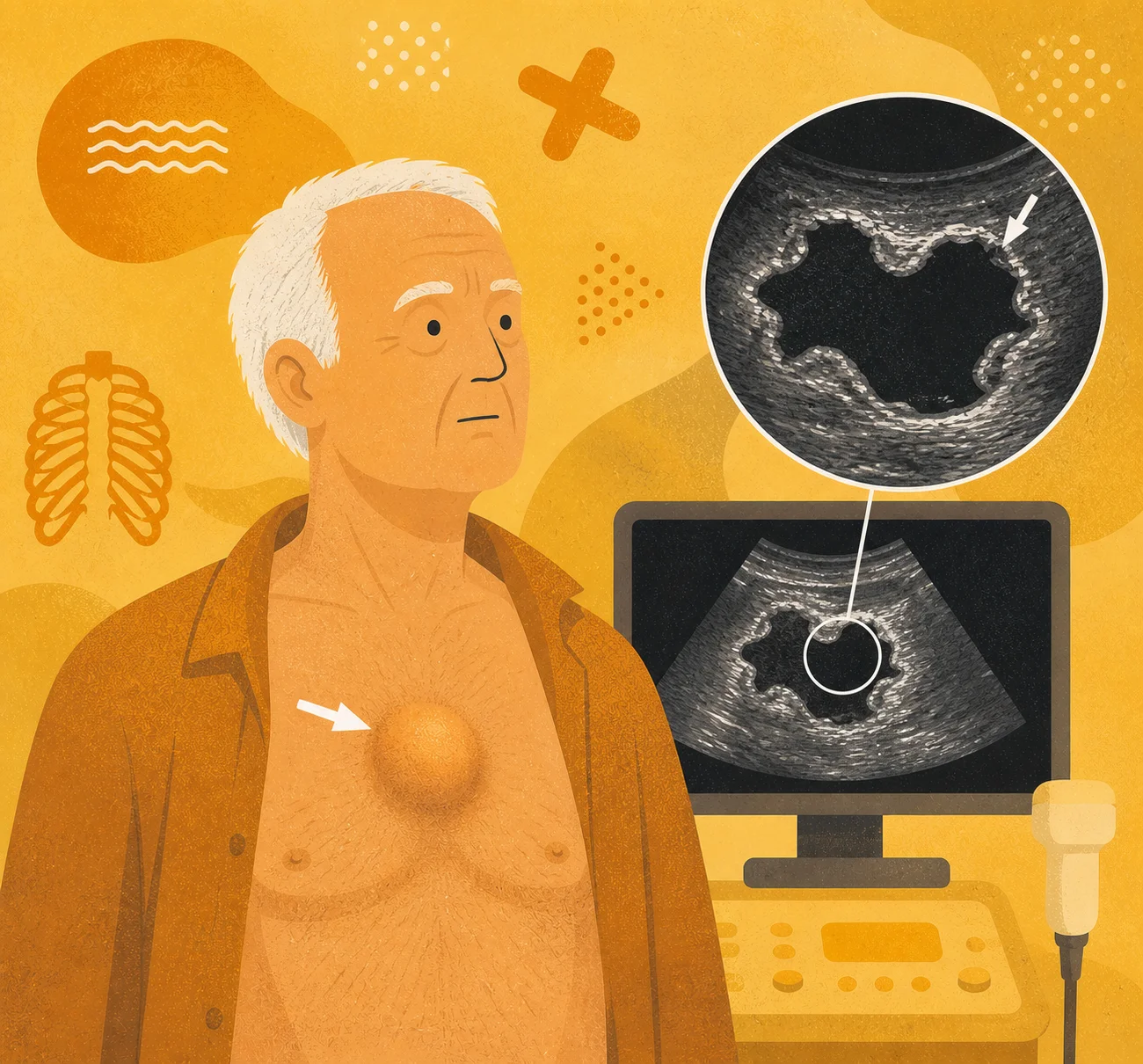
This article reports an 85-year-old patient with a sternal mass initially thought to be a cyst on ultrasound.
Combined histological, immunohistochemical, and RNA sequencing analyses revealed an aggressive tumor characterized by an NR1D1::MAML3 fusion.
Histological findings
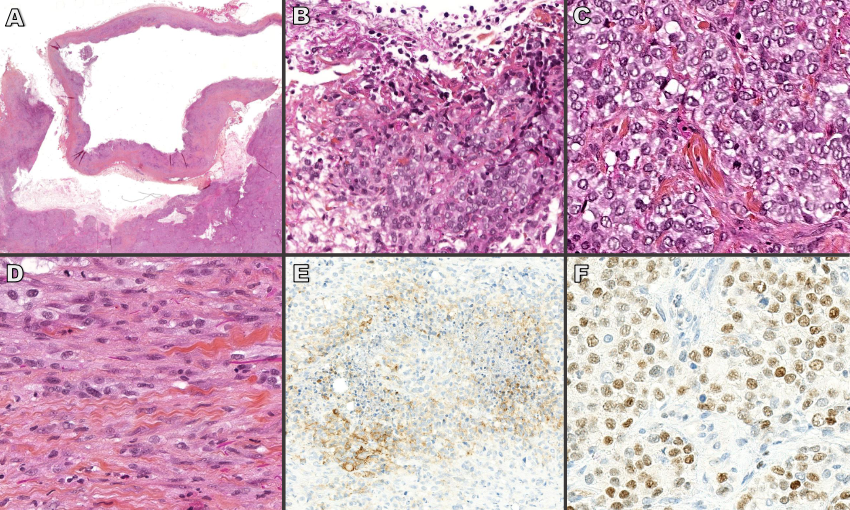
Histopathologic features of a neoplasm with an NR1D1::MAML3 fusion. Pseudo-cyst with a wall consisting of a dense proliferation of predominantly epithelioid tumor cells (A, H&E, 50× and B, H&E, 300×). Large pale epithelioid cells with oval uniform nuclei and vesicular chromatin (C, H&E, 400×). Spindle cells were observed in some areas, surrounded by a collagenous stroma (D, H&E, 400x). Positive staining for EMA (E, IHC, 300×) and ERG (F, IHC, 400×).
Molecular findings
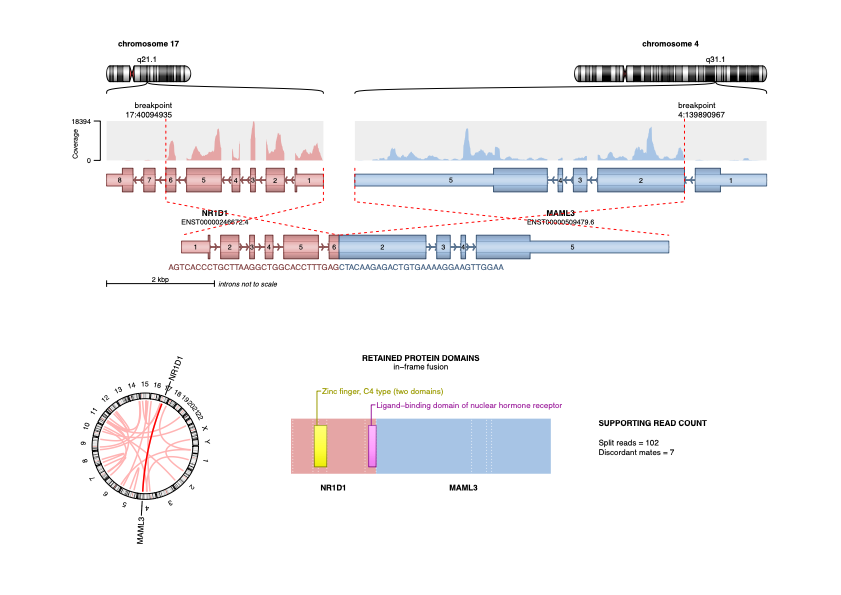
Molecular findings in the tumor. NR1D1 (ENST00000246672.4) exon 6 is fused in-frame to MAML3 (ENST00000509479.6) exon 2. The Circos plot illustrates the NR1D1::MAML3 fusion, alongside additional fusion events of uncertain significance (SNORA57::HSPA5 and GLIS3::KSR1), as well as other low-frequency fusion events (fusion fragments per million total reads [FFPM] < 0.1). The NR1D1::MAML3 fusion retains two conserved protein domains of NR1D1: The Zinc finger domain and the Ligand-binding domain of nuclear hormone receptor.
Why it matters
This tumor shows misleading features:
- on imaging, it mimics a cyst
- on histology, it resembles a carcinoma
Without molecular analysis, misdiagnosis is likely.
Accurate diagnosis is critical given its aggressive progression, with pleural, pulmonary, and bone metastases developing within one year.
Contribution to knowledge
This study:
- expands the spectrum of NR1D1-related tumors
- confirms their aggressive behavior
- shows that accurate diagnosis of tumors requires integrating morphology and genetics.
Other publications
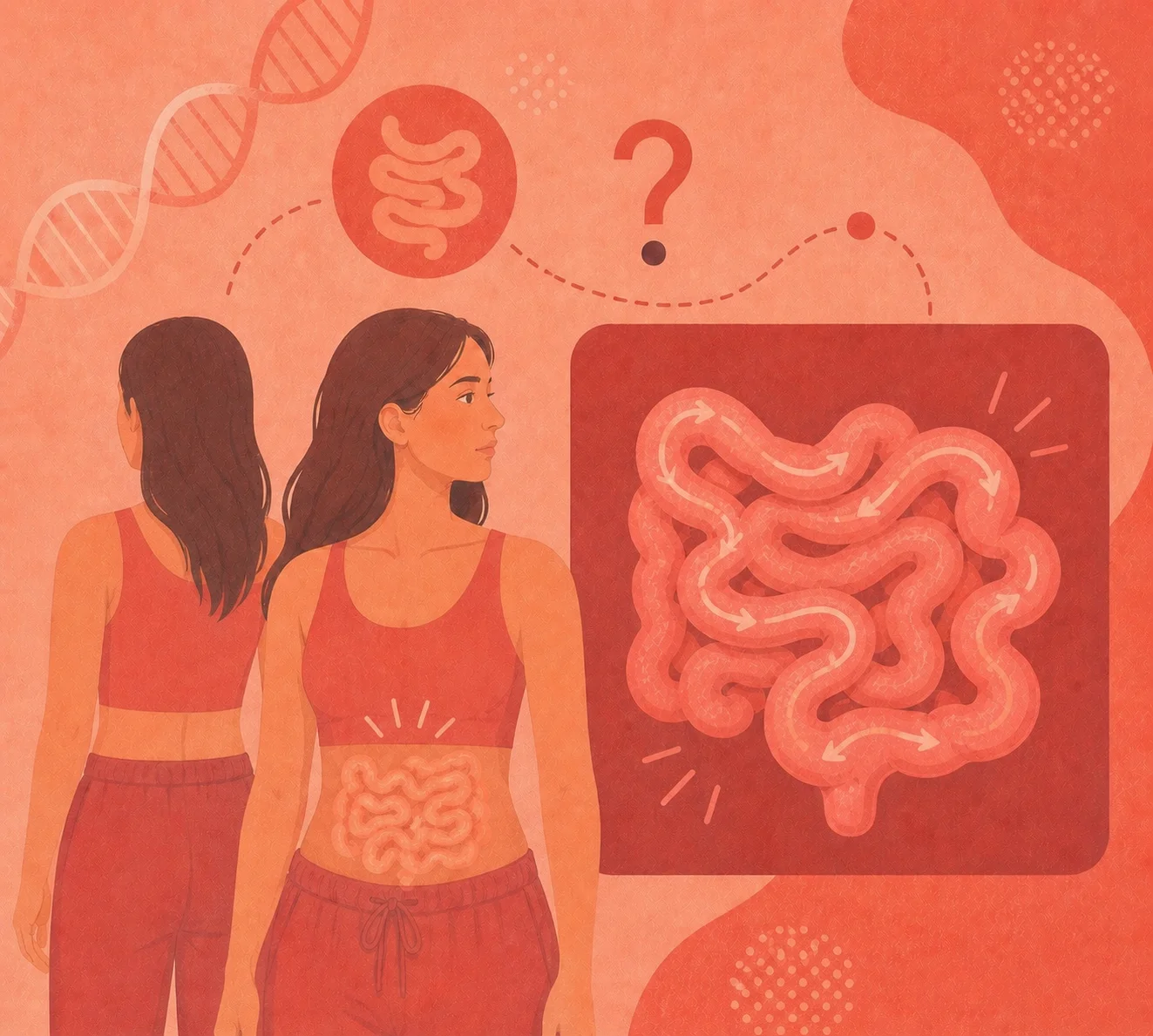
Histogenetic Classification Predicts Outcomes in 130 Adults With Chronic Intestinal Pseudo-Obstruction
Integrating genomic and histopathological data resolved 82% of idiopathic cases. Monogenic myopathy emerged as an independent predictor of favorable long-term survival.
Insights into the expanding intestinal phenotypic spectrum of SOCS1 haploinsufficiency and therapeutic options
SOCS1 haploinsufficiency can cause severe intestinal diseases, including Crohn's disease and chronic intestinal pseudo-obstruction.
Late-Onset Status Epilepticus Associated With Isolated Leptomeningeal Angioma and Sturge-Weber Syndrome-Related GNA11 Pathogenic Variation
Some unexplained adult-onset epilepsies may have an underlying vascular-genetic origin.

PFMG2025-integrating genomic medicine into the national healthcare system in France
The 2025 French Genomic Medicine Initiative represents one of the first nationwide efforts to integrate whole genome sequencing into routine clinical care.